
If you have ever dealt with Achilles problems like Achilles tendonitis, you know how frustrating it can be. You rest. You ice. You take a break from your morning runs or your weekend tennis matches. And just when you think it is better, that familiar twinge comes back the moment you try to get active again.
Why does this particular injury seem to hang on for dear life? And more importantly, what can you actually do about it? At Newtown Foot and Ankle Specialists, we help patients from Newtown, New Hope, Yardley, and the Trenton area break this frustrating cycle. Our team, led by Drs. William Lynde, Michael Lynde, Margaret Kerins, and Kenneth Lai, understands the unique challenges of this stubborn condition. Here is a deep dive into why Achilles tendonitis lasts and how modern treatment can help.
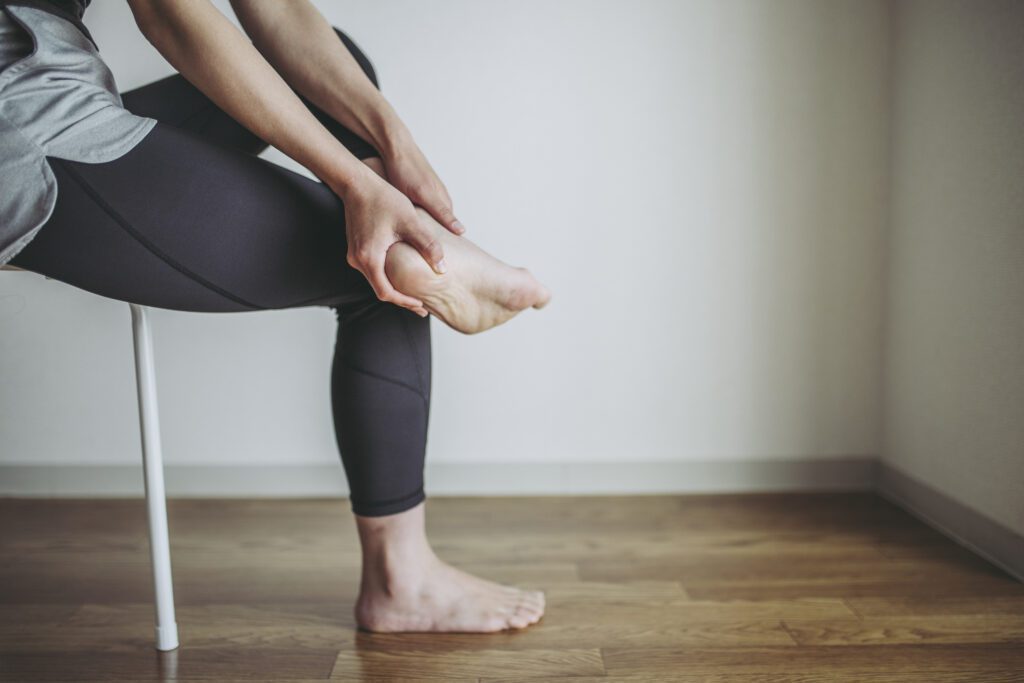
Why Achilles Tendonitis Won’t Let Go
The Achilles tendon is the largest and strongest tendon in your body. It connects your calf muscles to your heel bone and handles an incredible amount of force with every step. When you run, that force can be up to eight times your body weight. That is a lot of stress on one band of tissue.
Tendons do not get great blood flow. Unlike muscles, which have a rich supply of blood vessels to bring in oxygen and nutrients for healing, tendons are relatively avascular. That means they are slower to repair themselves. When you overwork them, the tiny tears and inflammation that develop do not heal as quickly as you would like.
The other problem is that most people try to return to activity too soon. The pain fades, you feel pretty good, and you lace up your sneakers. But the tendon has not fully healed. The scar tissue that formed is still weak and disorganized. Push it too hard, and you are right back where you started. This is a primary reason why Achilles tendonitis lasts for weeks or even months.
The Two Types of Achilles Tendonitis
Understanding what kind you have can make a big difference in treatment. Non-insertional Achilles tendonitis affects the middle portion of the tendon, usually about two to three inches above the heel. This type is most common in younger, active people, especially runners. It often causes pain and swelling in that mid-portion area.
Insertional Achilles tendonitis affects the lower part of the tendon where it attaches to the heel bone. This type can affect anyone, regardless of activity level, and is more common in older adults. Bone spurs often develop alongside this type. Both types can be stubborn, but the treatment approach may differ.
Modern Treatment Options Beyond Rest and Ice
If you have been stuck in the rest-and-repeat cycle, it might be time to consider something different. Modern podiatry has come a long way in treating stubborn tendon problems. The Newtown, PA podiatrists at our practice offer several advanced options.
Shockwave Therapy
Shockwave Therapy is one of the most effective tools we have for chronic Achilles tendonitis. At Newtown Foot and Ankle Specialists, we are proud to be the only practice in the area offering this advanced treatment. Shockwave therapy uses acoustic sound waves to stimulate blood flow and break down scar tissue. It essentially wakes up the healing process that your body had given up on. For many patients, this is the turning point in understanding why Achilles tendonitis lasts and how to finally stop it.
Ultrasound-Guided Injections
Ultrasound-guided injections take the guesswork out of treatment. When we can see exactly where we are placing medication, we can target the inflamed area with incredible precision. This means better results and fewer side effects. Our on-site ultrasound allows us to guide the needle directly to the damaged tissue, delivering medication exactly where it is needed most.
Custom Orthotics
We create custom orthotics to address the underlying mechanics that caused the problem in the first place. If your foot rolls inward or if you have high arches that do not absorb shock well, orthotics can correct that imbalance and take stress off the tendon. These custom inserts fit into your shoes and provide support that off-the-shelf products cannot match.
Physical Therapy
PT exercises involve lengthening the calf muscle while it is under tension, which helps remodel and strengthen the tendon fibers. Our team can guide you through the correct form to get the most benefit without causing further irritation.
Conservative Measures
Other helpful treatments include:
- Proper footwear: Shoes with a slightly elevated heel can take tension off the tendon.
- Night splints: These keep your foot in a gentle stretch while you sleep, reducing morning stiffness.
- Activity modification: Switching to low-impact activities like swimming or cycling can maintain fitness while allowing the tendon to heal.
When to Get Help for Your Achilles Pain
Mild Achilles pain that improves with rest might respond well to simple measures. But if you have been dealing with this for more than a few weeks, if the pain is getting worse, or if you feel a sudden sharp pain that makes you think the tendon might have torn, do not wait.
Other signs that it is time to see a professional include:
- Morning stiffness that lasts more than 30 minutes
- Pain that returns quickly after activity
- Swelling that does not go down with elevation
- A feeling of weakness in your calf or foot
At Newtown Foot and Ankle Specialists, we take the time to understand what is going on beneath the surface. We will talk about your activity level, your goals, and what you have already tried. Then we will put together a plan that gets you back to doing what you love.
The Path Forward
Your Achilles tendon is tough, but not invincible. Understanding why Achilles tendonitis lasts is the first step to overcoming it. With the right combination of treatments, you can break the cycle of frustration and get back to moving comfortably.
We serve patients from Newtown, New Hope, Yardley, and the Trenton area with compassionate, expert care. Our office offers on-site ultrasound for precise diagnosis and advanced treatments like shockwave therapy that are not available everywhere.
Call 215.234.3772 or request an appointment online through our patient portal. Let’s help you get back on your feet and back to the activities you enjoy.